1. Introduction: Why Global Startup Expansion Matters Right Now
Global startup expansion is no longer a luxury for “unicorn hopefuls.” It’s quickly becoming the default path for any ambitious founder building in software, AI, deep tech or edtech. The combination of remote work, online collaboration tools and widely available AI models means you can build from almost anywhere and sell almost everywhere.
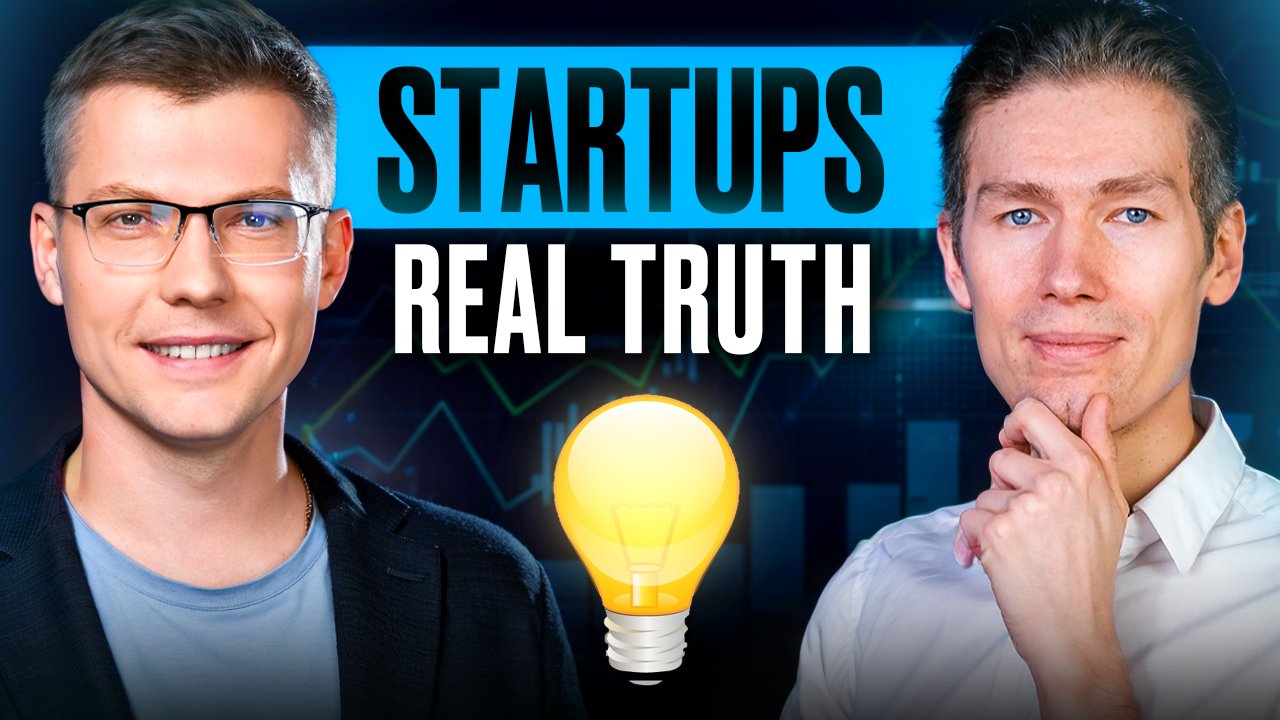
In the podcast conversation between host Anton Saburov and venture expert Dmitry Kurin, one theme keeps coming up: founders today are operating in a world where geography still matters, but much less than before. Early-stage startups can:
- Validate ideas in smaller home markets
- Reach US or EU customers without physically moving
- Build distributed teams across CIS, Europe, LatAm and the US
- Use AI tools to compensate for missing experience or knowledge
Yet, the decisions where to start, when to raise, and how to structure global startup expansion still define whether a project becomes a scalable company or just remains a long R&D hobby.
This article distills the most important lessons from that discussion and turns them into a structured, practical guide for founders at idea, pre-MVP or early revenue stage.
2. Meet the Expert: Who Is Dmitry Kurin and Why Listen to Him?
From corporate innovation to venture capital
Dmitry Kurin isn’t a theoretical observer. Over roughly a decade he has:
- Selected and evaluated over 10,000 startups across Russia, CIS and global markets
- Founded and led MTS Startup Hub and MTS Ventures, one of the leading corporate venture ecosystems in Russia
- Launched 12 acceleration programs and 5 incubation programs
- Helped allocate around $20M in startup investments
- Founded his own startup in Kazakhstan and works as an advisor and speaker for founders
This mix of corporate innovation, VC and hands-on entrepreneurship gives him a 360° view of how founders really succeed—or quietly fail.
Constructor University and the Constructor Start program
Today, Dmitry is:
- Director of the Entrepreneurship & Innovation Center at Constructor University in Bremen, Germany
- CEO of Constructor Start, a startup program built around early-stage tech founders
Constructor University is an international, English-language private university with students from over 110 countries and strong research and innovation focus.
How Constructor Start supports early-stage tech founders
Constructor Start is an 8-week, fully online, self-paced program focused on:
- B2B SaaS, deep tech, AI and edtech teams
- One-to-one mentorship sessions
- Core startup blocks: unit economics, fundraising, legal, sales & marketing, competitive strategy
One of its strongest value propositions is Demo Day:
- Startups pitch to up to 50+ investors from the US, EU and Asia
- There’s an opportunity to receive a $100K initial check from Constructor Capital, a €100M+ VC fund connected to the ecosystem
For founders interested in global startup expansion, this is not just education—it’s a structured bridge into the international VC and tech community.
3. The Modern Founder Profile: Age, Background, and Motivation
Typical founder profiles in Russia, CIS and Eastern Europe
When Dmitry worked mainly with the Russian and CIS markets, the “average” founder looked like this:
- Age: 35–39
- Background: Around 10 years in corporate roles
- Trigger: Desire to leave corporate comfort and finally “do my own thing”
These founders usually have strong professional experience, industry knowledge and networks—but they’re also used to corporate processes, risk-averse cultures and stable salaries.
Younger founders in the US and mature markets
When he shifted to looking at global applications—from the US, UK, EU, Asia and Africa—the pattern changed:
- Founders are often 25–30 years old
- Many have little or no corporate experience
- They start during or right after university
Why? In mature ecosystems, entrepreneurship is seen as a third default path (alongside corporate jobs and academia). Universities actively offer:
- Entrepreneurial courses
- Incubators and hackathons
- Exposure to VCs and founders early on
Why many leave corporate jobs after 10 years
In emerging markets, the “safe path” is still dominant. After 8–10 years, many professionals realize:
- They are solving repetitive problems
- Their learning curve is flattening
- They see real, painful problems corporations don’t move fast enough to fix
That frustration often becomes the fuel to finally launch a startup.
4. Younger vs Older Founders: Who Has the Advantage?
Strengths of founders over 40: experience, networks, judgment
Founders 40+ bring enormous advantages:
- Deep industry expertise
- Real-world experience handling crises, negotiations and hiring
- Stronger networks in corporations and institutions
- Better understanding of regulation, compliance and procurement
However, they often carry:
- More fear of failure
- More responsibilities (family, kids, mortgages)
- Lower risk appetite
So, while they could build very strong companies, they’re often slower to make bold moves or pivot.
Strengths of founders 25–30: speed, energy, risk appetite
Younger founders, on the other hand:
- Can work almost 24/7 on the startup
- Have fewer financial and family obligations
- Are less afraid of failing publicly
- Learn new tools and technologies quicker
In the AI era, this agility becomes even more critical. When new tools appear every month, the ability to experiment fast beats decades of experience in many cases.
The role of fear, responsibility and family obligations
After 40, every big decision is weighed against:
- “What if this doesn’t work?”
- “What will happen to my family?”
- “Can I really start over?”
This doesn’t mean older founders can’t succeed—many do. But they often need:
- Stronger conviction
- Supportive families and co-founders
- A clearer risk-management plan
How AI helps close knowledge gaps between generations
Dmitry makes an important point: in 2025, AI can compress decades of knowledge into hours of research. With the right prompts, founders can:
- Understand a new industry’s basics
- Draft contracts, pitch decks and marketing materials
- Simulate strategies and sales scripts
This means older founders can move faster than before, and younger founders can compensate for lack of experience—as long as both groups actually execute, not just “play with tools.”
5. Deep Tech and R&D-Heavy Startups: A Different Age Game
Why deep tech founders often “start” at 40+
In deep tech fields (quantum, microelectronics, advanced materials, energy), a “young” scientist is often 40 years old. That’s because they usually:
- Complete a PhD
- Do post-doc or long research projects
- Collect publications, patents and lab experience
Only then do they spin off startups.
When staying in R&D becomes a hidden trap
Anton notes a pattern in Europe and CIS: some “startups” are essentially permanent R&D projects that never reach the market. This is especially common among very mature scientists who:
- Love research more than customers
- Feel uncomfortable with sales and fundraising
- Prefer grants over revenue
The lesson: even in deep tech, you must plan how to commercialize your work early, or risk building something impressive that no one pays for.
6. US vs EU vs Emerging Markets: Choosing Your First Market
Why the US remains the #1 venture and capital market
According to Dmitry, the US is still the largest, most mature venture market in the world:
- Huge capital pools ready to back risky ventures
- Investors comfortable with idea-stage and pre-MVP bets
- Culture that accepts failure and fast pivots
- One large, relatively unified market of ~330M people
There’s also a strong friends and family network effect: it’s much more common to see neighbors, extended family or acquaintances putting $50K–$500K into early ideas.
Fragmented Europe: languages, regulation and tax issues
Europe has a large population, but it’s fragmented:
- Many languages
- Different legal systems
- Varying tax regimes and support schemes
You can’t simply “win France and then automatically get Germany.” You need:
- Localized products
- Local GTM strategies
- Multiple legal and tax setups
Dmitry even notes that in Germany—where he’s based—startups don’t enjoy strong tax advantages on capital gains, unlike the US or certain hubs like Cyprus or Singapore. This makes some investors more cautious.
Emerging markets like Africa, India and LatAm
At the same time, Africa, India, Indonesia, Nigeria and other emerging markets are huge:
- Populations of hundreds of millions
- Rapid growth in internet and mobile penetration
- Huge gaps in fintech, e-commerce, and education
Purchasing power and average check differences
However, average purchasing power is much lower. Dmitry mentions that the average check in some of these markets can be up to 10x lower than in the US. This changes unit economics and pricing strategies.
So: these markets are massive opportunities—but your product and pricing must be designed for them from day one.
7. Should You Target the US First in Your Global Startup Expansion?
The romantic dream vs. the harsh reality of the US market
Many founders dream: “I’ll go straight to the US, raise millions and conquer the world.”
Dmitry’s take is more grounded:
- Yes, the US is attractive for global startup expansion.
- No, you shouldn’t go there blindly without a plan B.
US expansion is:
- Expensive: rent, salaries, healthcare, legal fees
- Complex: visas, immigration, corporate structure
- Competitive: you’ll face the best teams in the world
If you move with no traction, no revenue and no backup plan, you risk burning your savings, your confidence and your runway.
Visa, cost of living and time-zone challenges
Practical issues:
- You’ll likely start on non-immigrant visas with limited flexibility.
- Time zones between CIS/Europe and the US are painful unless you shift your schedule.
- You may need several in-person meetings for enterprise sales, which means travel costs.
Smart “US-first” alternatives: LatAm base, remote-first, hybrid teams
Dmitry shares some clever workarounds he sees:
- Founders building for the US market while living in Latin America (Argentina, Colombia, Brazil)
- Same or close time zones
- Much lower costs
- Easy flights to major US cities
- Founders who stay in Serbia, Armenia, Georgia, Kazakhstan but
- Sell remotely to US or EU
- Hire local engineering talent
- Bring in local US salespeople who handle customer communication
In other words: you don’t have to live in the US to start selling there.
8. When to Raise Money: From Idea to MVP and Beyond
Friends, family & fools (3F) at idea and proof-of-concept stage
At the idea or early proof-of-concept (PoC) stage, it’s usually too early for institutional capital. The classic sources:
- Friends
- Family
- “Fools” (early believers willing to take big risks)
This money helps you:
- Build an initial prototype
- Test core hypotheses
- Cover basic living and dev costs
Accelerators, incubators and business angels
Once you have:
- A working PoC or MVP
- Some early feedback or pilot users
You can apply to:
- Acceleration programs
- Incubators
- Business angel networks
These players accept more risk than later-stage VCs and can help you refine the product, build a network and prepare a serious round.
When early-stage VC funds become a realistic option
Some pre-seed and seed VCs are willing to invest at PoC or MVP stage, especially if:
- The market is hot (AI, infrastructure, fintech, etc.)
- The team is outstanding
- The idea has clear global potential
What VCs really check at pre-seed and seed
At this stage, most VCs are not looking for perfect financials. They care about three big things:
- Team – experience, motivation, chemistry
- Market size – is this worth building a venture-scale business?
- Solution – is there something novel, or is it a “me too” clone?
You must reflect these three elements clearly in your pitch deck.
9. Building an Investable Startup: What Investors Want to See
Team quality: why investors “bet on the jockey”
As Dmitry says, early-stage investors “bet on the jockey, not the horse”:
- Complementary co-founder skills (tech + product + sales)
- History of working together or solving hard problems
- Clear, ambitious, global mindset
Solo-founders can raise, but the bar is higher. If you’re a solopreneur, you may need:
- Strong advisors
- A credible early team
- Very clear proof of execution capability
Market size and global scalability
You must show investors that:
- Your total addressable market (TAM) is large enough
- The product can expand beyond one city/country
- There is a clear path to global startup expansion if things go well
A clear, simple value proposition (not just AI buzzwords)
Just saying “we use AI” isn’t enough. Many founders:
- Plug an LLM API into their app
- Add “AI-powered” to their landing page
- Expect investors to be impressed
But investors look deeper:
- What problem are you solving?
- How does AI make it cheaper, faster, more accurate?
- Is your advantage defensible or can anyone replicate it in a weekend?
How to prepare a pitch deck that gets replies
Before any call, investors will skim your deck to decide if it’s worth their time. Cover at least:
- Problem & target customer
- Solution (with a short demo or screen preview)
- Market size and segment
- Business model
- Traction (even if small)
- Team slide (with 1–2 meaningful achievements each)
- Ask: how much you’re raising and what for
If you match the stage and sector that investor focuses on, and your deck is clear, your chances of getting a meeting grow dramatically.
10. AI Hype vs Real Value: Building Startups in the AI Era
Everyone says “AI” – who actually uses it?
In Dmitry’s current selection of early-stage startups, almost every deck mentions AI somewhere. But in reality:
- Some just call API calls to OpenAI, Claude or Mistral
- Others build real proprietary models, data pipelines or infra
The market is already starting to separate buzzword AI from infrastructure and workflow-changing AI.
LLMs as infrastructure, not the product
For many products, the LLM is not your USP—it’s infrastructure, like cloud or databases. Your real advantage is in:
- The workflow you design
- The data you access or own
- The user experience and distribution strategy
Skills founders must build on top of AI tools
Founders in the AI era must double down on:
- Customer discovery & clarity – AI can’t talk to users for you
- Prompting and system design – AI as a powerful assistant, not a toy
- Ethical and legal awareness – data, privacy, compliance
- Speed of experimentation – ship, measure, iterate
Those who treat AI as a serious leverage tool, not a marketing word, will dominate.
11. Future Trends: Where the Next Big Startups Will Emerge
Energy: powering data centers and AI infrastructure
AI and cloud growth is hitting a physical limit: energy. Future unicorns may come from:
- New ways to generate clean energy
- More efficient cooling and energy management for data centers
- Smarter grids and storage technologies
Without solving energy, the rest of AI dreams become very hard to scale.
Quantum computing as the next computing wave
Dmitry highlights quantum computing as a major upcoming wave:
- Big players like NVIDIA and others are entering the field
- Early startups are already experimenting with quantum-inspired algorithms
- Real-world impact may take time, but the foundations are being laid now
Microelectronics and hardware bottlenecks
The chip and hardware layer is another strategic bottleneck:
- AI and data growth are limited by chip availability and performance
- Countries and blocs want sovereign microelectronics capabilities
Startups that help design, manufacture or optimize hardware stacks will have outsized strategic importance.
Fintech, e-commerce and edtech in Africa and other emerging regions
In regions like Africa, there is still huge unmet demand in:
- Fintech – payments, credit, savings, insurance
- E-commerce – logistics, trust, discovery
- Edtech & edutainment – affordable, accessible learning
These markets may not pay US-level ARPU today, but the growth curves and demographics are extremely attractive.
12. Inside Constructor Start: Turning Early Products into Fundable Companies
Who the program is for (B2B SaaS, deep tech, AI, edtech)
Constructor Start is designed for tech-based startups, specifically:
- B2B SaaS
- Deep tech
- AI-driven platforms
- Edtech and learning technologies
Whether you’re in martech, AI tools, quantum, or vertical SaaS, the key requirement is: real technology behind your solution, not just a landing page.
8-week structure, 1:1 mentorship and Demo Day
Key elements:
- 8 weeks of online, self-paced learning
- 1:1 mentorship sessions with experienced operators and investors
- Structured blocks:
- Unit economics
- Competitive strategy
- Fundraising and investor readiness
- Legal fundamentals
- Sales and marketing for global markets
At the end, your startup participates in a Demo Day with investors from multiple regions.
How the 100K initial check and investor network work
Post-program:
- Top startups can receive a $100K initial investment from Constructor Capital (the connected VC fund).
- You gain exposure to a curated network of European, US and Asian investors, increasing your chances of raising follow-on capital.
Why being “tech-based” really matters
Dmitry emphasizes: they’re not looking for “yet another simple agency or marketplace clone.” They want:
- Proprietary tech (or at least deeply integrated tech workflows)
- Strong founding teams ready for global startup expansion
- Ambitions beyond a local niche solution
For founders serious about scaling beyond their home country, this type of structured support is extremely valuable. You can learn more about Constructor University and its programs on their official website.
13. A Practical Roadmap for Early-Stage Founders (Step-by-Step)
Here’s a condensed playbook inspired by Dmitry’s advice.
Step 1–3: Understand macro and micro context
- Study macro trends
- Global economy, interest rates, VC climate
- Tech waves: AI, energy, quantum, microelectronics
- Study your micro environment
- Local laws, startup support schemes, talent pool
- Customers and competitors in your niche
- Pick your initial beachhead market
- Often your home market is best for early validation
- If it’s very small (e.g., Armenia, Georgia), treat it as a test lab, not the final destination
Step 4–6: Validate, ship MVP and find first customers
- Validate the problem with real people
- Talk to at least 20–30 potential customers
- Focus on pain, not your feature list
- Build a lean MVP
- Use AI tools to go faster (code, copy, research)
- Don’t over-engineer; you just need something customers can use
- Get your first paying users
- Even small tickets matter
- Prove that someone will actually pay to solve this problem
Step 7–9: Choose markets and design your fundraising strategy
- Decide your expansion plan
- Stay local for now?
- Expand to EU regionally?
- Test the US remotely from another base (e.g., LatAm)?
- Choose funding sources by stage
- Idea/PoC → 3F, grants, maybe small angel tickets
- MVP + first revenue → angels, accelerators, seed funds
- Strong traction → larger seed or Series A
- Prepare a proper pitch deck
- Story: problem → solution → market → traction → team → ask
- Tailor it to investors who actually invest at your stage and in your vertical
Step 10: Build a long-term, 10-year vision
- Think in decades, act in weeks
- Ask: “Where do we want to be in 10 years?”
- Then work backwards: 5-year, 3-year, 1-year milestones
- Align your co-founders on this long horizon—this is a 5–10 year journey, not a side project
14. FAQs About Global Startup Expansion and Early-Stage Funding
1. Is it better to launch a startup when I’m 25 or when I’m 40?
Neither age is “better.”
- At 25, you have energy and fewer responsibilities.
- At 40, you have experience, networks and judgment.
The winner is the founder who executes consistently, learns fast and builds a strong team—regardless of age.
2. Should I move to the US immediately if I want to sell to US customers?
Not necessarily. You can:
- Stay in your home country and sell remotely
- Base yourself in LatAm for cheaper costs and similar time zones
- Travel periodically for key meetings
Move to the US only when you have a clear plan, some revenue or funding, and a fallback option.
3. When is the right time to talk to VCs?
Talk informally early (to build relationships), but pitch seriously when you have:
- At least a PoC or MVP
- Some user feedback or traction
- A clear understanding of your market and business model
Before that, focus on 3F, angels, grants and accelerators.
4. Do I really need AI in my product to get funded today?
No. You need a real problem and a compelling solution.
AI can be a powerful enabler, but investors can tell the difference between:
- A product that genuinely uses AI to deliver unique value
- A product that simply added “AI-powered” for marketing
Use AI if it strengthens your solution—not just to look trendy.
5. How can I stand out when there are thousands of startups competing for capital?
Focus on:
- A clear, specific niche and customer
- Deep insight into their pain points
- A credible team that has seen the problem from the inside
- A product that actually works, even if it’s ugly at first
Clarity beats complexity. Most decks fail because investors can’t quickly understand what the startup actually does.
6. What kind of startup fits a program like Constructor Start?
Constructor Start is ideal if you:
- Are building a tech-based solution (B2B SaaS, AI, deep tech, edtech)
- Are at PoC/MVP/early revenue stage
- Want to access global mentors and investors
- Are serious about global startup expansion, not just a local lifestyle business
The program helps you refine your business, prepare for fundraising and connect with investors who understand your space.
7. I’m a solo founder. Is that a problem for investors and programs?
It’s not a strict “no,” but it is a red flag for many investors. If you’re solo:
- Show a strong network of advisors
- Demonstrate your ability to recruit and lead a team
- Be open about your plan to add co-founders or key hires
Startups are marathons. Having co-founders spreads the load and reduces the risk of burnout.
15. Conclusion: Be Brave, Be Global, But Always Be Prepared
The conversation between Anton Saburov and Dmitry Kurin paints a realistic but optimistic picture:
- The world has never been more open to founders from anywhere.
- AI tools, remote work and online capital access make global startup expansion possible even from small markets.
- At the same time, competition, cost and complexity mean you can’t just “wing it.”
If you:
- Understand your macro and micro context
- Choose your first market strategically
- Build a strong, complementary team
- Use AI as leverage, not decoration
- Approach fundraising with timing and structure
…you dramatically increase your chances of turning your project into a global company.
Be ambitious. But be prepared. And remember Dmitry’s final advice:
- Stay informed about the world.
- Surround yourself with a great team.
- Aim for something genuinely disruptive, not just a copy-paste of what already exists.
Anton Saburov
hello@antonmarketer.com
https://linkedin.com/in/asaburov
https://instagram.com/anton_marketer
https://youtube.com/@antonmarketer
https://x.com/saburovanton