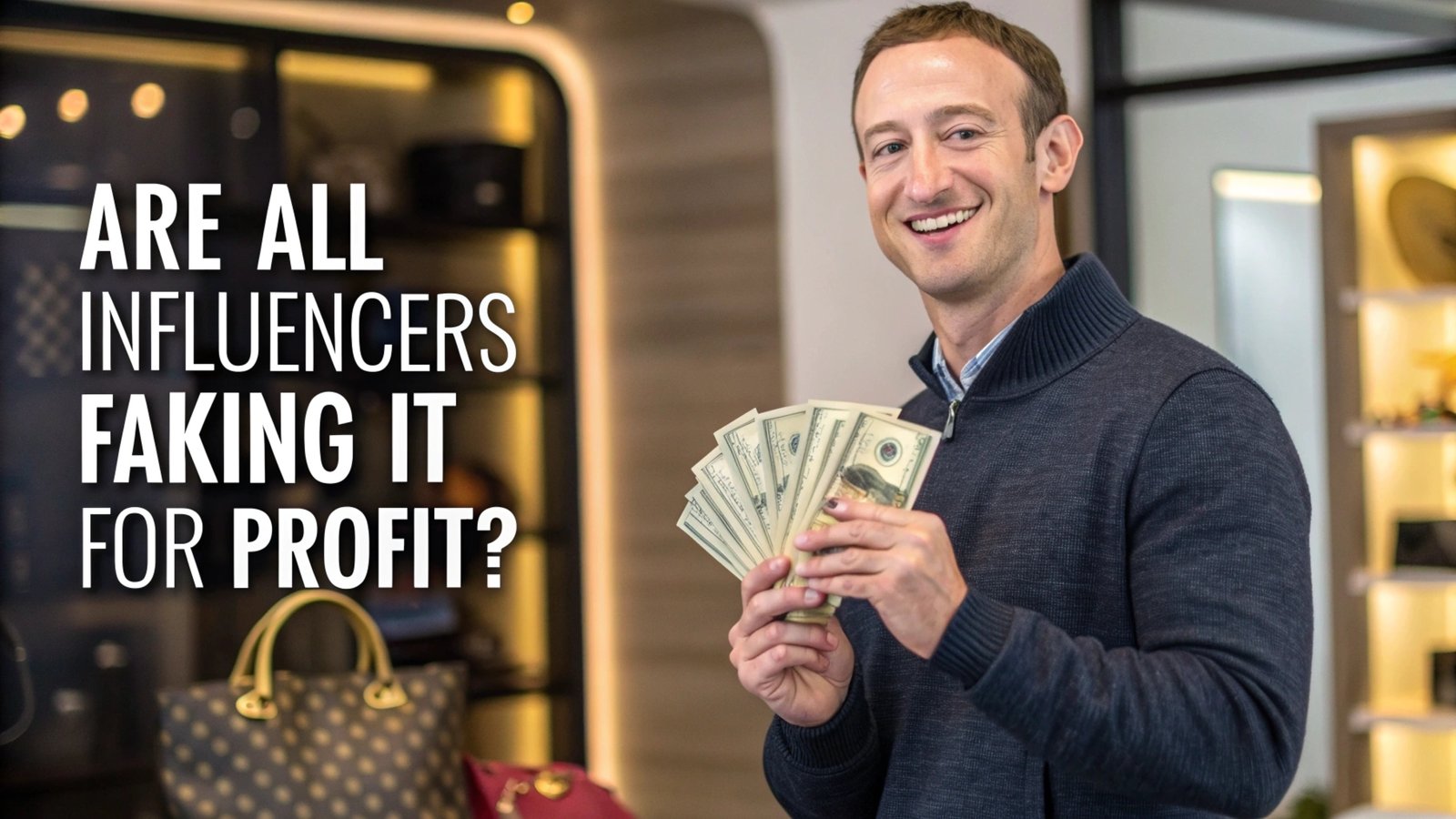
There’s been an interesting discussion in our community: Are all influencers fake? Do only those with money to boost their stats succeed? And do they make money by selling fake results to advertisers?
Let’s break it down step by step.
1. Almost All Influencers Have Fake Followers
Many influencers have fake followers, sometimes without even knowing it. For just $1 on an SMM panel, anyone can buy 10,000 low-quality bot followers for someone else. Social platforms try to fight this and often remove fake accounts.
2. Advertisers Pay for Active Audiences
Brands pay influencers with active audiences for promotions. However, fake engagement is also common. Influencers with bigger budgets can fake more activity and get more brand deals. This isn’t always the case, but it happens often. The influencer’s main goal is to secure a partnership.
3. Smaller Influencers Often Perform Better
The larger an influencer’s audience, the more mixed it becomes. That’s why I prefer working with nano-influencers who have 5K–50K followers. The return on ad spend (ROAS) is usually higher with smaller influencers. But managing these campaigns manually is expensive, so automation is key. I’ll share our tools below.
4. How Influencer Marketing Works
- Start with a paid or barter deal (if your product has a good profit margin, ideally 30%+).
- Measure results (promo codes, traffic, sales).
- Identify top-performing influencers and offer them a long-term contract or ambassador deal.
- Maximize value from ambassadors and scale your campaigns.
You’ll need some budget, but even $2,000–$3,000 can get you started effectively.
5. Automation Makes Everything Easier
We use our platform influbalance.com, which includes:
- 400K Instagram influencers worldwide.
- 4 million YouTube channels (in progress).
Our influencer managers love the advanced filters (by location, audience size, engagement rate, and estimated contract cost).
From Influbalance, we export direct influencer contacts and send them automated email sequences via Instantly.com. We’re also developing our own tool for this.
- Email open rates: 40–60%
- Reply rates: 15–40%
Positive replies are sent directly to Telegram, where managers finalize deals. Automation helps us reduce costs and increase ROAS.
If you want to talk to my team, you can book a call here. We specialize in the US, Europe, MENA, and LATAM markets.
6. Why Influencer Marketing Fails
Many influencer campaigns fail because they lack automation, a systematic approach, and a clear plan that goes beyond one-off integrations.
Focus on building a strategy, automating processes, and scaling effectively. That’s the real key to success in influencer marketing.