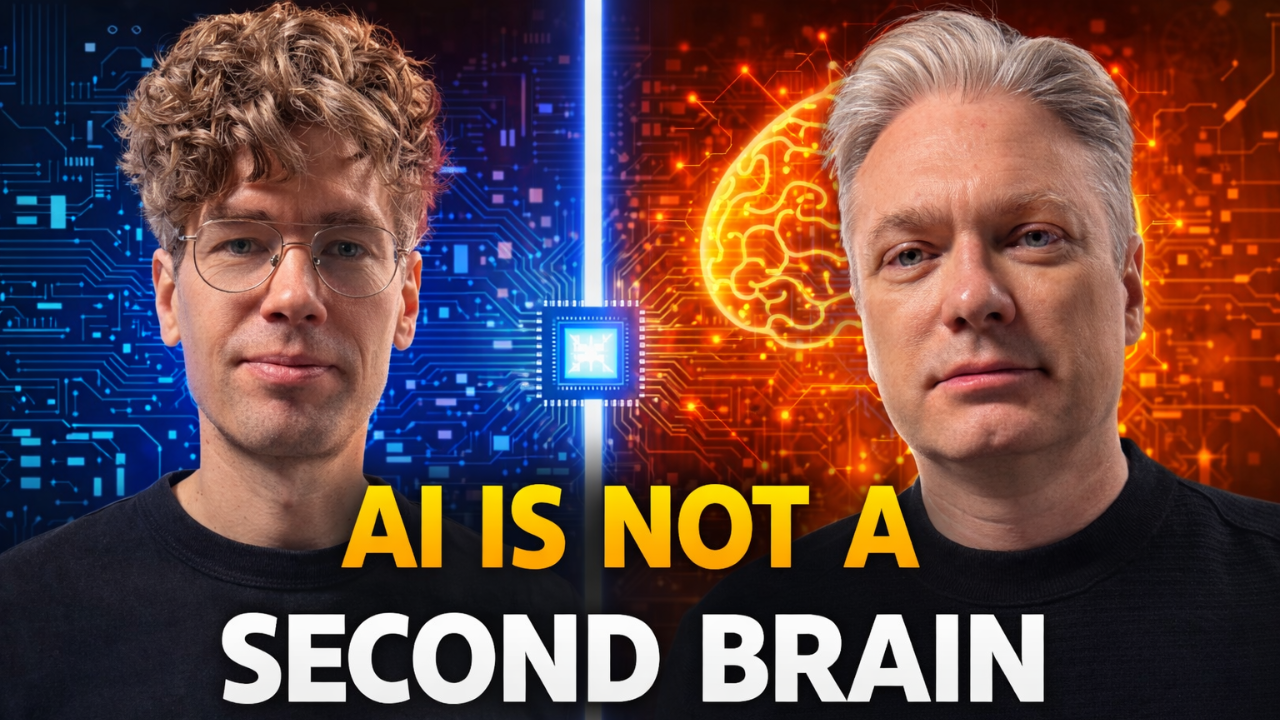
Introduction to AI vs Human Brain
The debate around AI vs human brain has become one of the most fascinating conversations of our time. With artificial intelligence writing essays, diagnosing diseases, and even generating art, many people are asking: Is AI becoming like the human brain? Or are they fundamentally different?
To answer this, we need to move beyond hype and look at science. Artificial intelligence is powerful, yes — but the human brain remains one of the most energy-efficient and complex systems ever discovered. Understanding their similarities and differences helps us see the future clearly.
Let’s break it down.
What Is Artificial Intelligence?
Artificial Intelligence (AI) refers to computer systems that perform tasks normally requiring human intelligence. These include language processing, pattern recognition, problem-solving, and decision-making.
Machine Learning and Neural Networks
Modern AI systems rely heavily on artificial neural networks. These are mathematical models inspired — not copied — from biological neurons.
Neural networks consist of:
- Layers of artificial neurons
- Adjustable weights (similar to synaptic strength)
- Training using massive datasets
However, these are simplified models. They are digital, mathematical approximations — not biological replicas.
Large Language Models and Transformers
Systems like large language models (LLMs) use transformer architectures. These models process enormous amounts of text data and predict the next word based on statistical patterns.
They do not “understand” language in the human sense. Instead, they calculate probabilities across billions of parameters.
How the Human Brain Works
The human brain is a biological organ made of approximately 86 billion neurons. Each neuron connects to thousands of others, forming trillions of synapses.
Neurons and Synapses
Neurons communicate using electrical spikes and chemical signals. Unlike digital systems that use binary code (0s and 1s), the brain operates through dynamic electrochemical processes.
This is not simple on/off switching. It’s complex, analog, and highly adaptive.
Energy Consumption and Efficiency
Here’s something mind-blowing:
- The human brain consumes roughly 20 watts of power.
- That’s less than a typical light bulb.
Yet it performs:
- Vision
- Language
- Emotional reasoning
- Motor coordination
- Creativity
Meanwhile, modern AI data centers consume megawatts of electricity. That’s millions of times more power.
This difference is central in the AI vs human brain discussion.
AI vs Human Brain: Structural Differences
Digital vs Biological Systems
AI systems today are digital. They operate through silicon-based processors and binary code.
The human brain is:
- Non-digital
- Biochemical
- Continuous (not strictly binary)
This fundamental difference affects efficiency, flexibility, and adaptability.
Parallel Processing vs Sequential Computing
The brain processes information in massively parallel ways. Billions of neurons fire simultaneously.
Traditional computers process instructions sequentially. While GPUs allow parallelization, they are still fundamentally digital and structured differently.
Energy Efficiency: 20 Watts vs Data Centers
Energy use is one of the biggest differences in AI vs human brain comparisons.
Why the Brain Is So Efficient
The brain evolved over millions of years under energy constraints. Survival required efficiency.
It uses:
- Sparse signaling
- Event-driven spikes
- Local processing
No massive centralized data center required.
The Cost of Training Modern AI
Training advanced AI models can consume enormous electricity. Some reports suggest that major AI companies are expanding nuclear and renewable power capacity to sustain their systems.
This raises important questions:
- Is this scalable?
- Is it sustainable?
Learning and Adaptability
Supervised vs Experiential Learning
AI often learns from labeled datasets. Humans learn from real-world experience.
A child can learn a concept from a few examples. AI often needs millions.
Neuroplasticity
The human brain rewires itself constantly. This ability, called neuroplasticity, allows recovery from injury and adaptation to new environments.
AI models must be retrained or fine-tuned — they don’t naturally reorganize themselves like biological systems.
Consciousness and Self-Awareness
One major distinction in AI vs human brain discussions is consciousness.
Does AI Understand or Predict?
AI predicts patterns. It does not:
- Feel emotions
- Experience awareness
- Possess subjective experience
It generates outputs based on probabilities.
The Philosophy of Mind Debate
Philosophers and neuroscientists still debate what consciousness is. Until we understand natural intelligence fully, replicating it artificially remains speculative.
Explainability and the “Black Box” Problem
Many people think AI is mysterious. But is it more mysterious than our own brains?
Can Scientists Understand AI Models?
AI models contain billions of parameters. While complex, researchers can inspect weights, activations, and training data.
The challenge is scale, not invisibility.
Comparing AI to Understanding Our Own Brain
Ironically, we understand artificial neural networks in some ways better than biological brains.
You cannot see the synaptic weight inside your own brain. But AI parameters can be measured.
Neuromorphic Computing and the Future
One promising field bridging AI vs human brain differences is neuromorphic computing.
Spiking Neural Networks
Unlike traditional AI, spiking neural networks use event-based spikes similar to biological neurons.
They aim to:
- Reduce energy consumption
- Improve efficiency
- Mimic brain timing dynamics
Electronic Brain Concepts
Researchers are exploring electronic systems that operate more like biological brains — non-digital, spike-based, and energy-efficient.
Projects such as the Human Brain Project (https://www.humanbrainproject.eu/) have contributed foundational research in this area.
Data: The Fuel of Intelligence
Digital Data vs Real-World Sensory Data
Humans constantly gather sensory input:
- Vision
- Sound
- Touch
- Internal body signals
AI systems depend on digital data — text, images, sensor feeds.
There is still far more real-world data than digitized information.
Personalized AI and Health Monitoring
Future systems may integrate:
- Wearable devices
- Brain-computer interfaces
- Personalized health models
This could transform medicine and daily life.
The Limits of AI Today
Hype vs Reality
AI is powerful — but not magical.
It:
- Predicts patterns
- Automates tasks
- Assists decision-making
It does not possess true understanding or consciousness.
Energy, Scaling, and Hardware Challenges
Major challenges include:
- Power consumption
- Data limitations
- Hardware bottlenecks
Progress may require moving beyond purely digital systems.
FAQs About AI vs Human Brain
1. Is AI smarter than the human brain?
No. AI can outperform humans in narrow tasks but lacks general intelligence and consciousness.
2. Does AI use only 10% like the brain myth?
Humans use virtually all parts of the brain. The “10% myth” is scientifically incorrect.
3. Can AI become conscious?
There is no scientific evidence that current AI systems are conscious.
4. Why is the human brain more energy efficient?
Because it evolved under strict biological constraints and uses spike-based signaling.
5. What is neuromorphic computing?
It is a field of research designing hardware inspired by brain architecture to improve efficiency.
6. Will AI replace the human brain?
AI is more likely to augment human intelligence rather than replace it.
Conclusion: Cooperation, Not Competition
The comparison of AI vs human brain is not a battle. It is an exploration.
Artificial intelligence is a powerful technological tool. The human brain remains the most advanced natural intelligence system we know.
The future likely belongs to collaboration — personalized AI systems, neuromorphic hardware, and intelligent tools that enhance human capabilities rather than replace them.
Understanding the differences helps us move forward wisely — with innovation, responsibility, and optimism.
Anton Saburov
https://linkedin.com/in/asaburov